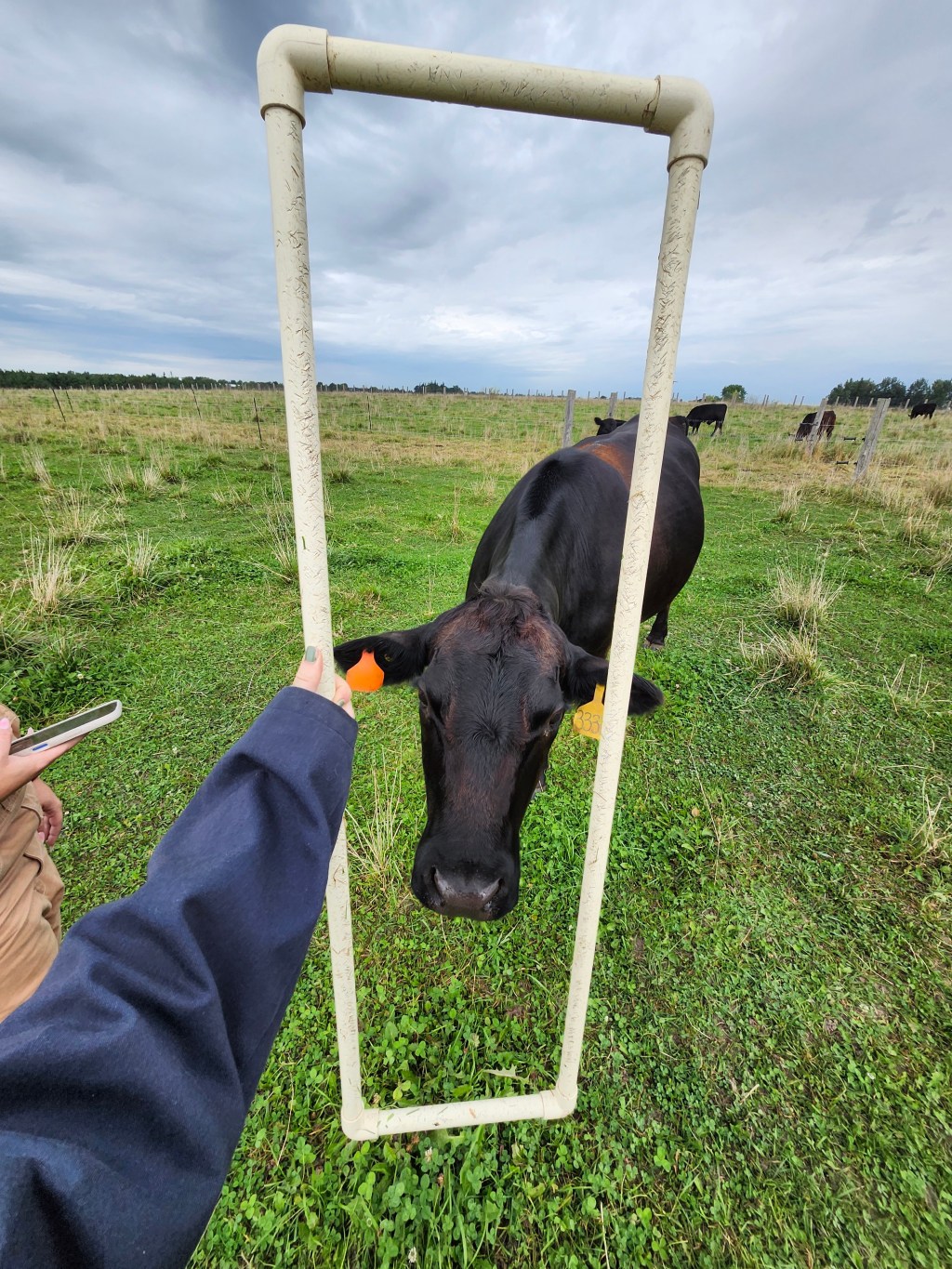
So… I had this whole plan to blog each week of my study period and what I was doing and how I was doing it and if I felt like I was doing enough and spoiler alert: that did NOT happen. During my study period I wasn’t JUST studying, I was still running my summer grazing trial, running data from my past two summer and fall trials to create posters and a presentation and everything else you have to do to get ready for a conference. Needless to say, I was STRESSED. Probably the most I have been in years (maybe even my whole life) as the qualifying exam (QE) is such an intimidating process and it really feels like a make-or-break part of the PhD process.
What even is a PhD qualifying exam?
At the University of Guelph, where I go, the PhD QE is an oral exam (can have a written component as well, but I opted for entirely oral) where you have a six to eight week study period for one major topic with two examiners and two minor topics each with their own examiner. Each examiner gets 20 minutes in the first round and 15 minutes in the second round so it is a LONG exam to be in and think for. The QE is also different from any undergraduate exam as you aren’t there to regurgitate information and show how good your memory is, your goal is to show that you are extremely well read in your field and can synthesize the information into comprehensive answers about anything in your subject area.
How does the study process work?
The study process is very self-guided. You aren’t sitting in a class for a semester being lectured to, you are having a couple of meetings with your committee members, they may send you a list of readings to get started with and then you build off of those (hoping you are going in the right direction lol). You can ask them questions throughout the study period, but again they are looking at and thinking about how you approach this whole process (scary but very rewarding). With where I am at in my PhD process, I was excited but also incredibly nervous for this exam process, as I felt behind in my readings (I am in year 3 of 3 of straight back to back trials! There are only so many hours in a day!) but my examiners really worked with me and it truly felt like they wanted to push me academically while helping me succeed.
What did I do to prepare?
I knew that this exam was going to be coming up so the first thing I did was prepare a little presentation for my advisor on the topics I was interested in studying as well as where my professional interests are headed. I wanted this exam to not just challenge me academically, but for what I was learning to also be things I was very interested in and had application to my professional goals. The two of us had some back and forth to settle on my topics and pick my examiners and then I started booking meetings with my team!
I tried to plan my studying out so that each examiner got one weekday, and then Friday would be a review day but with my trial also running, this was a little tricky sometimes. I also found that there were a couple of weeks where I really only wanted to study one of my topics and so I did allow myself to indulge in that for a couple of days but was sure to still read at least one or two papers from each other topic that week as well. My study process was also not limited to weekdays and I did spend more time than I would have liked doing readings on the weekends. Again, I was very intimidated by this exam and knew that I would be pretty upset with myself if I didn’t give it my all. In the grand scheme of things eight weeks is not that much time, but in intensive study mode it certainly feels VERY long.
I tried so many different study techniques:
- Question and answer cue cards
- Reading papers and taking notes/ annotating
- Talking about what I read that day over meals with friends/ family
- Presenting what I had learned to my lab/ other graduate students who had already taken their own qualifying exams and having them ask me questions
- Listening to podcasts on relevant topics
- Having my examiners send me lists of where they would like me to focus so I knew where I needed to focus my efforts (but also knowing they didn’t have to stick to that and could really ask me anything in the subject area lol)
What really worked well for me was making my presentations and any way that I could interact with other people about the content I was learning. Teaching is such a powerful tool and forces you to really learn, understand, and remember the content so that you can teach it with confidence. Discussing the information with others also helped me to realize the gaps in my own knowledge and gave me new areas to focus on and dive into.
For me, the least effective studying was done with the cue cards. I never felt like I was asking deep enough questions and it just felt wrong for me in this process. For my topics there was not a lot of straight up memorization, but if there had been this probably would have felt more useful.
Using podcasts surprised me with how relevant it felt! In my research trials, I am out in a field with cows multiple times a week for a few hours at a time and I obviously cannot be reading during this time, so I listened instead! The podcasts helped me to learn more about my ruminant nutrition minor topic as there are so many episodes on things like feed storage and trace minerals etc. I still paired this with readings, but if you have a more applied topic, like ruminant nutrition for me, I really encourage you to see what podcasts are out there on your topics for some passive learning while you’re doing lab work or cooking dinner!
What were my topics?
My major topic was rumen fermentation, split into my two major examiner topics of fibre digestion and methane production. My first minor topic was pastures and grazing, and my second was ruminant nutrition.
With my PhD trials all being about understanding the enteric methane production of grazing cows, these topics were all relevant to both my academic journey and where I would like to be professionally!
Sustainability in agriculture is something I am very passionate about. Working on the cow side of beef production, where the animals are eating higher fibre feeds and therefore have higher enteric methane production than feedlot animals, I feel like the sustainability niche I am carving out for myself is more relevant than ever, and I am very excited to see where my career path leads once I complete my PhD.
How did my exam go?
I PASSED!!!!!!!
At my university, this is a pass/fail process and not graded, though I don’t know how it works at other schools.
I got to pick my order of examiners and what felt right for me was to sandwich my major examiners between my minor examiners, so I went pastures and grazing, methane production, fibre digestion, and then ruminant nutrition. The whole exam feels blurry in my memory but it was much more conversational than I expected it to be, it was more discussion than a question/answer session. I think this style of exam really worked for me after all of the effort I had put into studying, as I could get into some of the depth and not just the breadth of what I had worked on, and if I ever went too far down a rabbit hole my examiners could interrupt and put me back onto what they wanted me to discuss. The first round of questioning, they let me talk to my heart’s content when they asked questions. Then, in the second round, my examiners wanted more pinpoint answers to some content questions and got into the more philosophical type of questions… This is a Doctor of Philosophy degree after all haha.
I was very nervous for my exam and my examiners could absolutely tell. My main piece of feedback from all of them was to be more confident because I did know what I was talking about (this also felt scary in its own way; I have major imposter syndrome lol).
What did I do after my exam?
I drove 4 hours to go camping with my high school friends immediately after this nearly 4 hour exam process. When we had originally planned this trip, my exam was supposed to be two weeks earlier but due to a change in examiners, the exam date moved and now the trip started the same day as the exam. I knew that either way this exam went I was going to either need some shoulders to cry on or some friends to celebrate with so this was absolutely the most perfect decision for me post-exam. After passing, I frankly felt invigorated and almost jittery so the drive felt like nothing! If it had gone the other way, a friend was carpooling with me, and she likely would have needed to drive my car haha.
I encourage you to have a plan with friends right after (maybe more chill than a 4 hour drive lol) because being alone after such an intensive period of your life could feel pretty isolating. I also find that graduate students in general don’t celebrate their successes as often or as hard as they should, so get on it and celebrate yourself!!
Happy to answer any questions anyone has about this process! I know it can be scary, but it is also so rewarding to pass this exam and take this HUGE step in your academic journey.
Cheers!



Leave a Reply